
I made my Best Canned Black Beans almost every week for years before I dove into cooking beans from scratch. For some reason, dried beans felt intimidating. The soaking, the planning ahead, the long cook time. It seemed like a lot more work than opening a can.
Turns out, it's not. You don't even have to soak them (more on that below). The whole process takes time, but the active effort is minimal: pick over the beans, put them in a pot with water, and let them simmer. The payoff is a batch of beans with deeper flavor, better texture, and a rich cooking broth you'll want to save.
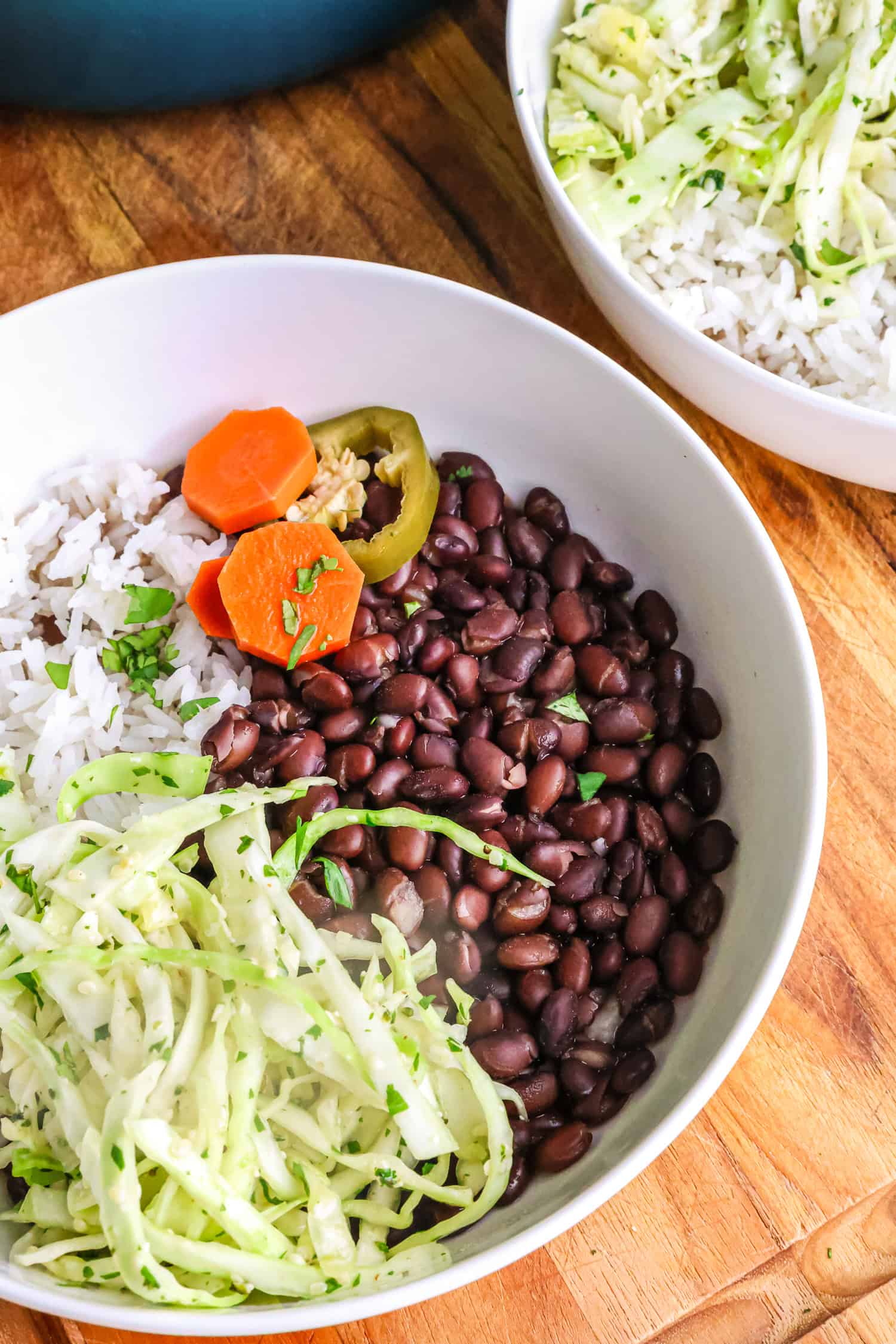
If you've read my guide on How to Cook Dried Beans, a lot of the general principles apply here. This post is specifically about black beans, which happen to be one of the most forgiving varieties to cook from dried. They have thinner skins than many other beans, they simmer up reliably, and they take well to a wide range of seasonings. Below you'll find my stovetop method, notes on soaking, and plenty of ways to use them once they're cooked.
Why Cook Black Beans from Dried?
Canned black beans are perfectly fine, and I still use them regularly. But cooking from dried gives you a few things canned beans can't.
The flavor is noticeably different. Dried beans cooked low and slow with aromatics develop a depth that canned beans don't have. The broth alone is worth the effort, especially if you like eating your beans in a bowl with a squeeze of lime and some cilantro.
A one-pound bag of dried black beans costs a dollar or two and yields about 6 cups cooked. That's roughly four cans worth of beans. If you're curious about the broader cost picture, I break it down in my post on beans as an affordable protein source.
Ingredient Notes
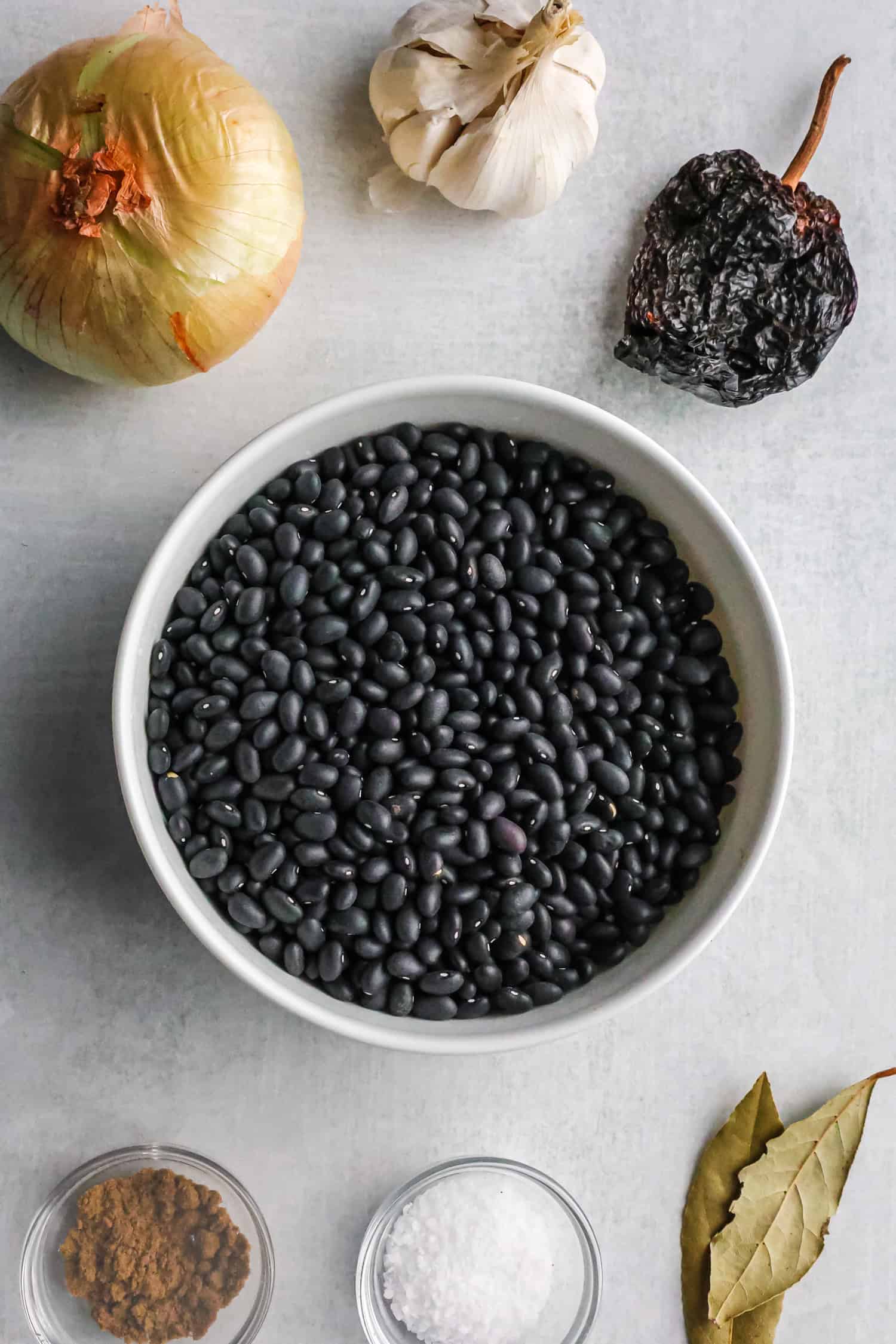
This recipe keeps the ingredient list short. At its core, you need dried black beans, water, and salt. Everything beyond that is optional and depends on how flavorful you want the beans and their broth to be.
Dried black beans. One pound (a standard bag), picked over and rinsed. Spread them on a sheet pan or cutting board and look for any small stones, debris, or shriveled beans before cooking. One pound yields about 6 cups cooked, which is roughly equivalent to four 15-ounce cans. If your bag has a harvest or pack date, check it. Beans picked within the last two years cook faster and more tenderly. If there's no date, that's fine, they may just take a bit longer to simmer and could benefit from soaking beforehand.
Water. 6 to 8 cups, enough to keep the beans covered by about 2 inches while they cook. The exact amount depends on the size and shape of your pot. Check the water level as they simmer and add more if the beans start peeking above the surface.
Salt. 2 teaspoons, divided. The first teaspoon goes in at the start with the water, and the second gets stirred in about 45 minutes into cooking. Splitting the salt this way seasons the beans gradually rather than all at once.
Optional Seasonings
What else goes into the pot is entirely up to you. If you want beans with a clean, neutral flavor to fold into other recipes, water and salt are all you need. If you want a more flavorful broth (and beans you'd be happy eating straight from a bowl), the seasonings below are worth adding. Use any combination, or all of them.
Bay leaves. Two bay leaves add a subtle earthy, herbal note to the broth. Remove them before serving.
Onion. One onion, either chopped or halved. How you cut it depends on how you plan to use the beans. If they're going into other recipes (tacos, salads, burritos), leave the onion in halves. It flavors the broth without leaving visible pieces. If you're planning to eat these as a bowl of brothy black beans, chop the onion so it becomes part of the dish. Either approach works. Sometimes my kids are fussy about seeing onions, so if they're likely to be eating the beans in a recipe, I leave the onion whole to infuse the flavor without the evidence. When I'm excited to just sit down with a bowl of beans, I chop the onion and enjoy it as part of the meal.
Ground cumin. One teaspoon. Cumin and black beans are a natural pairing, and it gives the broth a warm, slightly smoky quality.
Ancho chili. One whole dried ancho chili adds gentle, smoky heat that builds as the beans cook. Remove it before serving.
Head of garlic. Slice the top off a whole head of garlic and drop it into the pot. The cloves soften and mellow as they cook. You can squeeze them out and stir them into the beans at the end or discard the head. If you don't have a whole head on hand, 2 teaspoons of chopped garlic works too.
To serve: A squeeze of lime and chopped cilantro.
To Soak or Not to Soak
Soaking is optional, especially for black beans. They have thinner skins than many other varieties, which means they hydrate and soften more easily during cooking. If your beans were harvested within the last couple of years, you can skip soaking entirely and they'll still cook up tender.
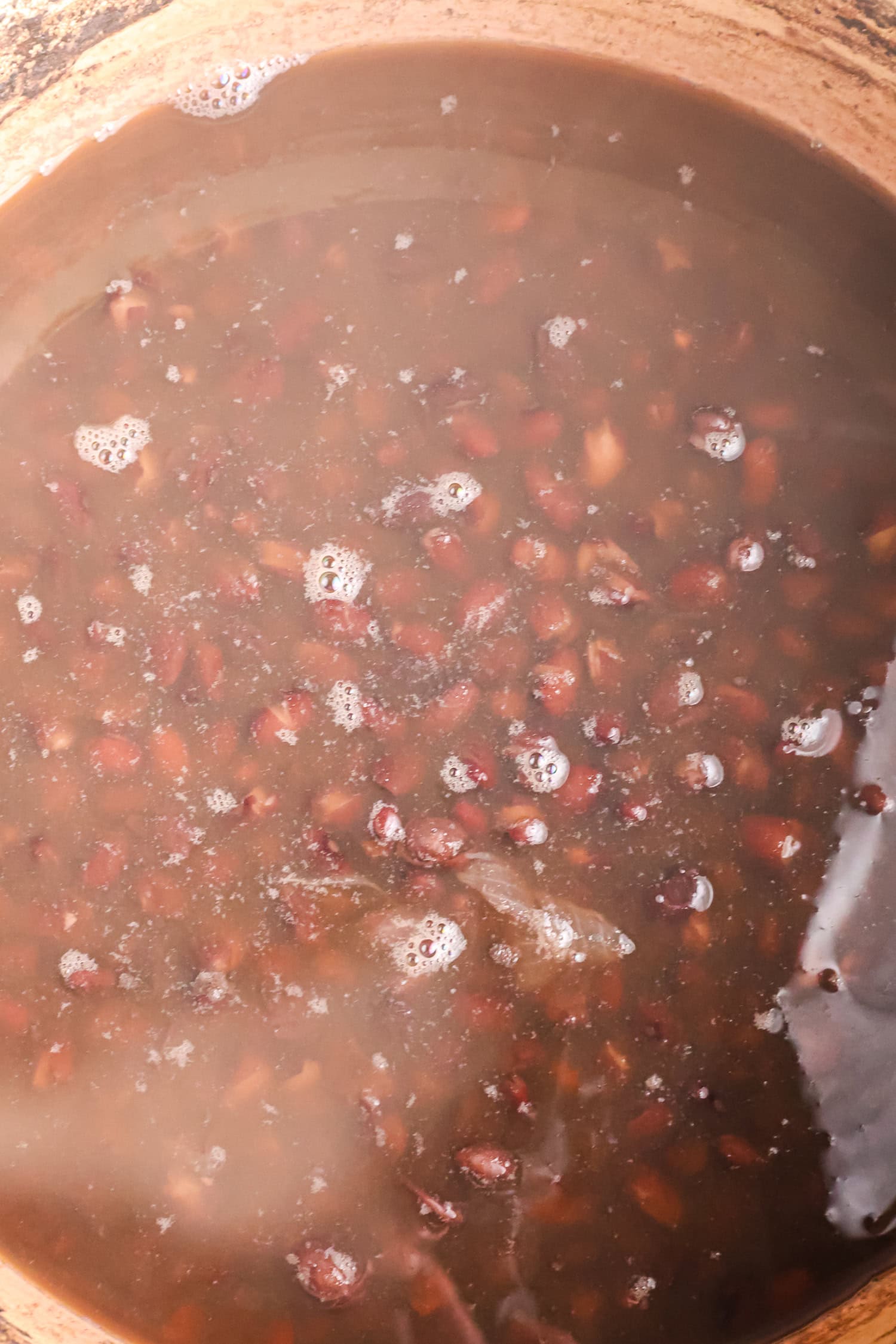
That said, soaking does reduce the cooking time. If you want your beans done faster, either an overnight soak (cover the beans by a few inches of cold water and let them sit 8 hours or more) or a quick soak will cut the simmer time down. Soaked black beans can be tender in about an hour, while unsoaked beans may need closer to two.
I go into more detail on soaking methods in my posts on how to cook dried beans and the quick soak method. For this recipe, just know that soaking is a useful shortcut but black beans don't require it.
One more thing: the age of your beans matters more than whether you soak them. Beans picked within the last year or two cook faster and more evenly regardless of method. Older beans take longer no matter what you do. If you're not sure how old yours are, plan for the longer end of the cook time and start checking early.
How to Cook Dried Black Beans on the Stovetop
Pick over and rinse. Spread the beans on a sheet pan or cutting board. Remove any stones, debris, or shriveled beans. Rinse well under cold water.
Add beans and water to the pot. Place the beans in a large pot and cover with 6 to 8 cups of water. You want about 2 inches of water above the beans. Add 1 teaspoon of salt, along with any optional seasonings you're using (bay leaves, onion, cumin, ancho chili, garlic).
Bring to a boil, then simmer. Bring the pot to a boil over high heat. Reduce the heat to a gentle simmer and partially cover. You want a steady, lazy bubble, not a rolling boil.
Add the remaining salt. About 45 minutes into cooking, stir in the second teaspoon of salt.
Simmer until tender. Continue cooking until the beans are creamy and soft all the way through, 1 to 2 hours total. Start checking around 45 minutes if you soaked them, or around an hour if you didn't. Unsoaked older beans can take up to two hours. Check the water level occasionally and add more if needed.
Remove the aromatics. Fish out the bay leaves, the ancho chili, the garlic head, and the onion halves (if you left them whole).
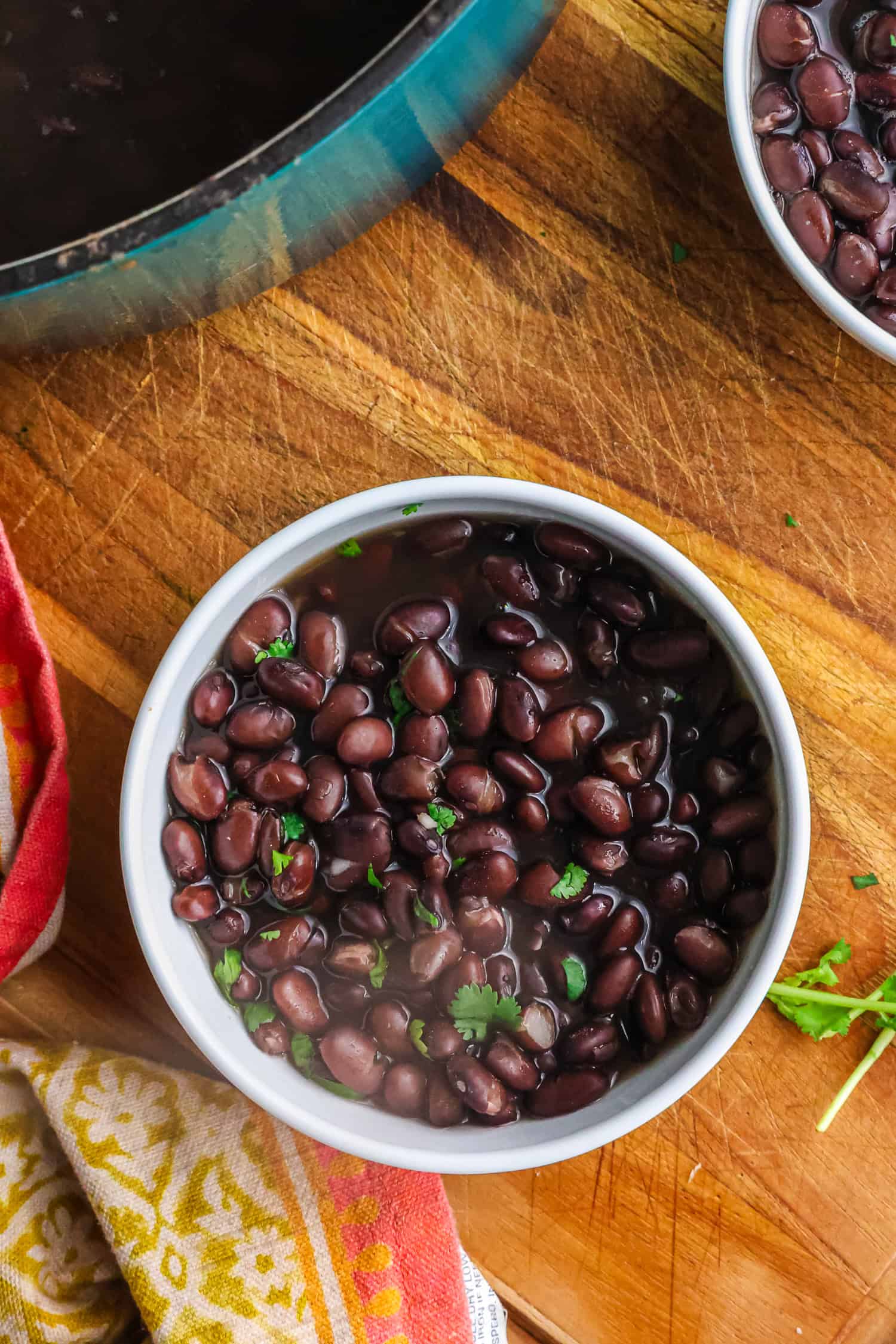
Serve. Ladle the beans into bowls with some of their cooking broth. Finish with a squeeze of lime and chopped cilantro.
How to Know When They're Done
The beans should be creamy and soft all the way through, with no chalky or grainy center. Pick one up and press it between your fingers. It should yield easily. If you bite into one and it still feels firm or starchy in the middle, keep simmering.
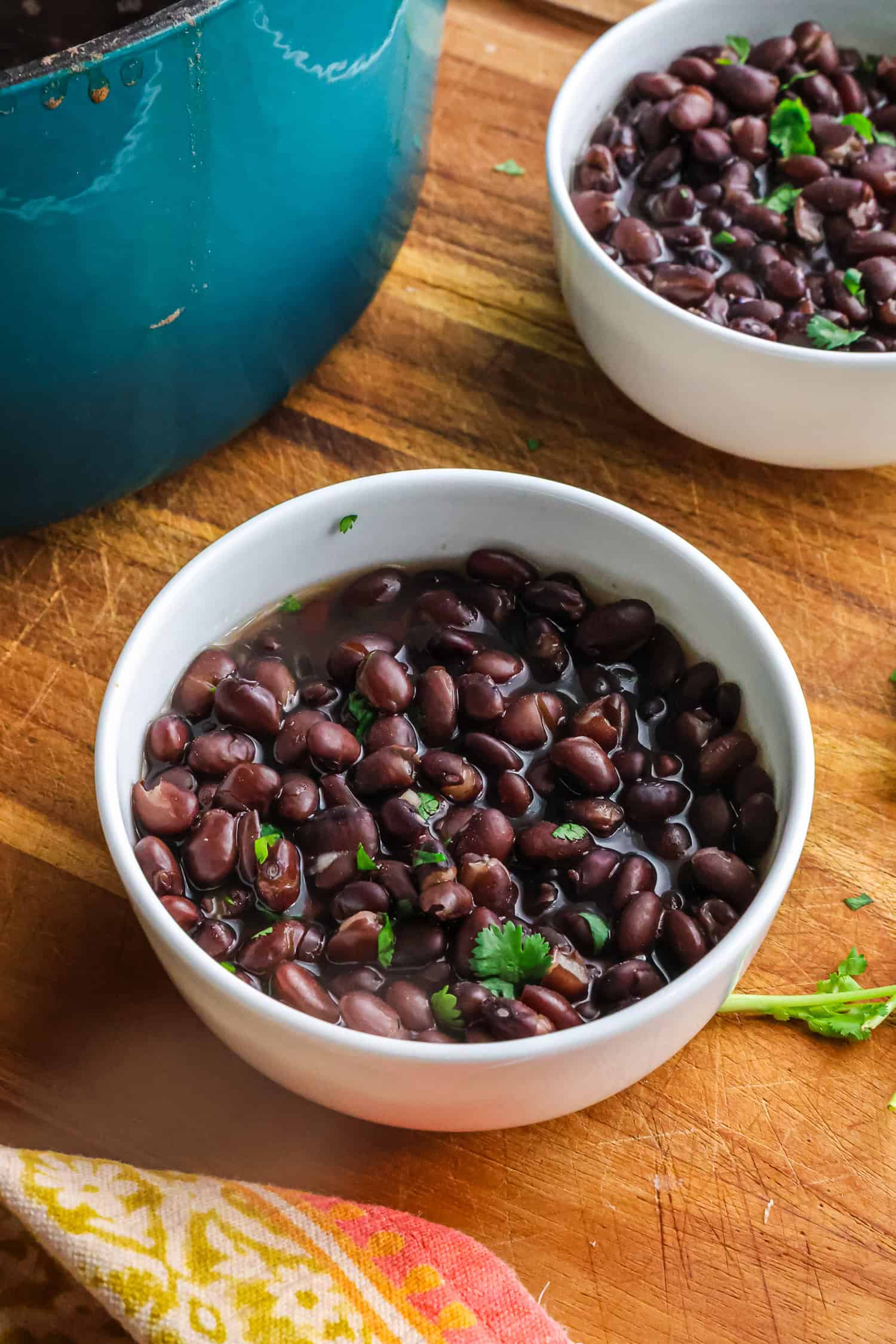
The skins may crack slightly on some beans, which is fine. If the majority are splitting open, your simmer may be too aggressive. Turn the heat down and let them cook more gently.
Storage
Store cooked black beans in a tightly sealed container in the refrigerator for 4 to 5 days. Keep the beans in their cooking liquid, even if you don't plan on using the liquid in a recipe later. The broth keeps the beans moist and flavorful and prevents them from drying out.
You can also freeze cooked black beans. Portion them into containers (about 1.5 cups per container is roughly equivalent to one can) with enough cooking liquid to cover, and they'll hold up well in the freezer for a long time. I'm not a food scientist, but I've pulled them out months later and they taste just as good.

Ways to Use Your Cooked Black Beans
The day I make a batch of black beans from scratch, dinner is usually just a bowl of brothy beans. Topped with cilantro and a squeeze of lime, sometimes over rice, sometimes on their own. When you've cooked them with all those aromatics, that's a pretty satisfying meal without adding much else.
From there, the rest of the batch gets folded into meals throughout the week. The options are wide open, from soups and salads to tacos and dips. If you're looking for ideas, my canned black bean recipes roundup works just as well with home-cooked beans (and they'll taste even better).
If you're curious about how black beans stack up against other varieties, my post on Black Beans vs Pinto Beans breaks down the differences in flavor, texture, and nutrition.
FAQ
Can I use the cooking liquid? Yes, and I'd encourage it. The broth from black beans is flavorful and slightly thickened from the starches that cook out of the beans. It's great for serving the beans in a bowl, stirring into rice, or using as a base for a quick soup. Even if you drain the beans for a recipe, save the broth in a jar in the fridge.
Why are my beans still hard after cooking? Most likely they're old. Dried beans that have been sitting for more than a couple of years can resist softening even with soaking. Adding acidic ingredients (tomatoes, citrus, vinegar) too early in cooking can also toughen the skins. Keep the acid for the end. If you suspect old beans, soak them first and plan for a longer simmer.
How much does one pound of dried black beans make? About 6 cups of cooked beans, roughly equivalent to four 15-ounce cans.
Can I add other seasonings? The aromatics in this recipe give the beans a warm, Latin-inspired flavor, but you can take them in any direction. Smoked paprika, oregano, a strip of kombu, or a ham bone if you eat pork all work well. Black beans are versatile enough to adapt to whatever flavor profile you're cooking toward.
If you try this method, I'd love to hear how it turns out. Leave a comment and let me know how you served them or what seasonings you used.



Recipe

How to Cook Dried Black Beans
Ingredients
- 1 pound dried black beans picked over and rinsed
- 6 to 8 cups water enough to cover beans by about 2 inches
- 1 teaspoon salt for beans to boil
- 1 teaspoon salt additional for cooking
- 2 bay leaves optional
- 1 onion chopped or halved (optional, see note)
- 1 teaspoon ground cumin optional
- 1 dried ancho chili optional
- 1 head of garlic top sliced off, or 2 teaspoons chopped garlic (optional)
- a squeeze of lime
- chopped cilantro
Instructions
- Pick over the dried black beans and remove any debris or shriveled beans. Rinse well.
- Add the beans to a large pot and cover with 6 to 8 cups of water. You want at least 2 inches of water above the beans.6 to 8 cups water, 1 pound dried black beans
- Add 1 teaspoon of salt, along with the bay leaves, onion, cumin, ancho chili, and garlic if using.1 teaspoon salt, 2 bay leaves, 1 onion, 1 teaspoon ground cumin, 1 dried ancho chili, 1 head of garlic
- Bring to a boil over high heat. Reduce heat to a gentle simmer, partially cover, and cook until the beans are tender, 1 to 2 hours.
- About 45 minutes into cooking, add the remaining 1 teaspoon of salt.1 teaspoon salt
- Start checking for doneness around 45 minutes if you soaked the beans, or around an hour if you didn't. The beans are done when they're creamy and tender all the way through.
- Remove the bay leaves, ancho chili, garlic head, and onion halves (if left whole) before serving.
- Serve in bowls with a squeeze of lime and chopped cilantro.a squeeze of lime, chopped cilantro
Notes
Onion: Leave it in halves if cooking beans for other recipes (flavors the broth, no visible pieces). Chop it if eating the beans as a bowl of brothy beans. Soaking is optional. Soaking reduces cooking time but isn’t necessary, especially for black beans. See the full post for details, or try the quick soak method. Cook times vary. Younger soaked beans can be tender in about an hour. Older unsoaked beans may need closer to two hours. Storage: Refrigerate in a tightly sealed container with the cooking liquid for 4 to 5 days. Freeze in 1.5-cup portions with liquid for longer storage.
Nutrition





Did you make this recipe? Let me know!