
If you've been around here for any amount of time, you know I have a deep affection for beans. What started as a practical pantry habit turned into a full-blown fascination with pulses - their history, their versatility, and yes, their nutrition.
When I realized that one standard 15‑ounce can of black beans delivers about 24.5 grams of protein, I got curious.
Not because I think beans are the only answer.
But I wanted to see how they stack up when you put everything side by side.
So I pulled USDA FoodData Central entries. I cross‑referenced Bureau of Labor Statistics retail prices. I checked protein percentages. I standardized everything.
And instead of comparing random portion sizes, I asked a very specific question:
What does it cost to get 24.5 grams of protein - the same amount found in one 15‑ounce can of black beans?
There are many ways to get protein. Chicken. Steak. Salmon. Eggs. Tofu. Protein powder.
Beans are not the only option.
They are simply one of the most affordable - and when you run the numbers carefully, that becomes very clear.
The Benchmark: 24.5 Grams of Protein
For this comparison, everything is standardized to 24.5 grams of protein, the amount found in one standard 15‑ounce can of black beans (drained), based on USDA FoodData Central values.
All protein values were pulled directly from USDA FoodData Central entries or verified manufacturer documentation for whey isolate.
Retail pricing was drawn from:
- Bureau of Labor Statistics Average Retail Food Prices
- Federal Reserve Economic Data (FRED)
- Market pricing reports for salmon and whey isolate
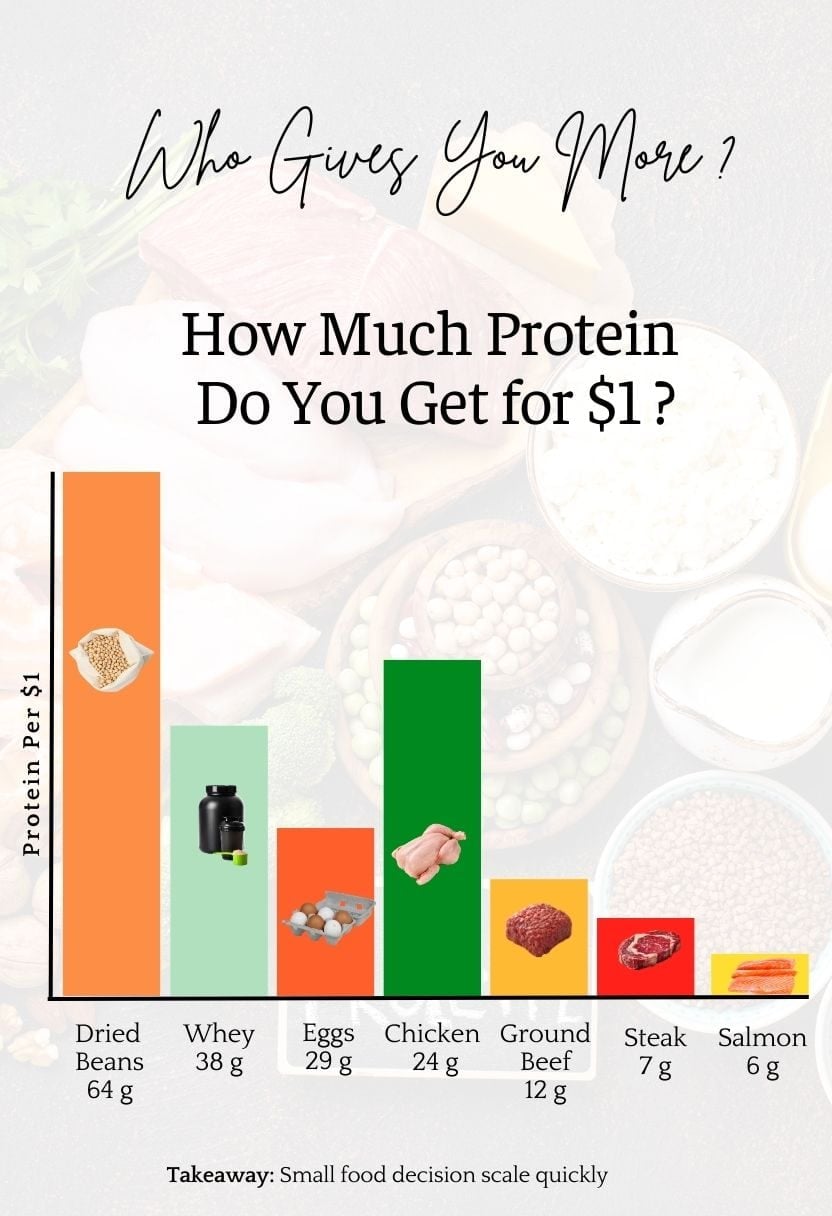
Cost to Reach 24.5 Grams of Protein
Ranked from most cost‑effective to most expensive:
| Food | Cost for 24.5g Protein |
| Dried Black Beans | ~$0.38 |
| Whey Protein Isolate | ~$0.65 (wholesale; retail higher) |
| Whole Eggs (Large) | ~$0.85 |
| Canned Black Beans | ~$1.00 |
| Boneless Skinless Chicken Breast | ~$1.00 |
| Ground Beef | ~$2.07 |
| Sirloin Steak (USDA Choice) | ~$3.40 |
| Atlantic Salmon (Frozen Fillet) | ~$3.86 |
Prices reflect national averages at time of research. Regional variation applies.
A quick note on how I pulled this together: I'm not a scientist, I'm just a very bean-obsessed food blogger who enjoys digging into the details. I gathered protein data from USDA FoodData Central and used federal retail price data as a starting point for costs. In some cases, I cross‑checked those numbers against current market reports and multiple grocery store websites.
Food prices move. Sometimes quickly. They shift with seasonality, supply chains, and broader market forces. Over several weeks, I paid close attention to prices at multiple grocery stores here outside of Boston, Massachusetts. The exact dollar amounts may differ where you live, and yes this is an expensive area, but the ranking from least expensive protein sources to most expensive closely reflects what I'm seeing on shelves locally.
What Stands Out
1. Dried Beans Are Exceptionally Cost‑Efficient
At roughly $0.38 for 24.5 grams of protein, dried black beans are the most affordable option in this comparison.
They require soaking and cooking, but from a pure protein‑per‑dollar standpoint, they are difficult to beat.
2. Canned Beans Compete With Chicken
Canned black beans and boneless chicken breast both land around $1.00 per 24.5 grams of protein.
That surprised a lot of people when I ran the math.
Beans are often framed as a "budget substitute," but in reality they sit right alongside chicken in cost - while also bringing fiber and complex carbohydrates.
3. Higher‑Cost Animal Proteins Climb Quickly
Ground beef roughly doubles the cost.
Steak and salmon more than triple it.
That doesn't make them "bad" choices. It simply means protein sourcing dramatically affects a grocery budget.
Protein Is Not the Only Variable
While this comparison focuses strictly on cost per 24.5 grams of protein, it's worth noting the broader nutritional context.
According to USDA FoodData Central:
- Black beans provide fiber alongside protein.
- Animal proteins provide zero fiber.
- Beans contain minimal saturated fat.
- Some animal proteins contain higher levels of saturated fat.
This isn't an argument for eliminating meat or fish.
It's simply a reminder that foods bring different nutrient profiles to the table.
This Is Not All‑or‑Nothing
I am not vegetarian.
We eat chicken. We eat fish. We occasionally eat steak.
But beans have become foundational in our kitchen because they allow flexibility.
They can:
- Stretch smaller portions of meat.
- Anchor vegetarian meals.
- Lower overall grocery costs.
- Add protein and fiber simultaneously.
If you are vegetarian or vegan, beans are central.
If you are flexitarian, beans stretch the budget.
If you eat meat regularly, beans can complement your plate without requiring a complete overhaul.
Why This Matters
When protein costs range from $0.38 to nearly $4.00 for the exact same protein target, that difference compounds quickly over weeks and months.
Understanding the numbers gives you options.
Not restrictions.
And if you've been here a while, you know I'll always advocate for meals that are:
- Balanced
- Practical
- Affordable
- Built from real ingredients
Beans just happen to check all of those boxes.



Did you make this recipe? Let me know!