
Beans tend to get lumped together as one food - one texture, one flavor, one experience. But the truth is, "beans" isn't a single ingredient so much as a whole category, made up of many different types with slightly different textures, uses, and personalities in the kitchen.
Before getting into how to cook beans, how to eat them comfortably, or why I rely on them so heavily in my own kitchen, it helps to start with a simple question:
What Are Beans, Technically?
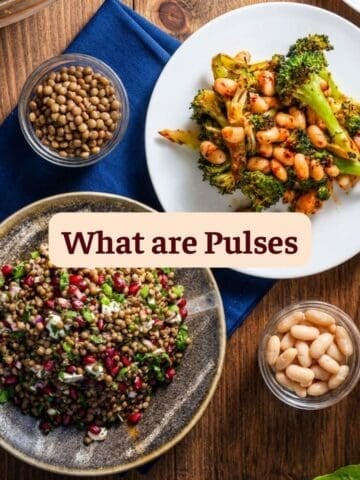
If we want to get a little nerdy (without turning this into a biology textbook), beans fall into a group called pulses. Pulses are the edible, dried seeds of plants in the legume family. This category includes dry beans, lentils, and dried peas.
So when we talk about beans in the kitchen, we're really talking about a specific subset of legumes - the part of the plant that's harvested once it's fully mature and dried. This is the same definition used by organizations like the USDA and the Food and Agriculture Organization of the United Nations (FAO).
A quick clarification that helps:
- Legumes are the plant family (this includes beans, lentils, peas, soybeans, and even peanuts).
- Pulses are the dried seeds of those plants.
- Beans are one type of pulse.
That's why you'll often see beans show up in more than one place nutritionally. They provide carbohydrates like grains, protein like other plant proteins, and fiber and micronutrients often associated with vegetables.
The "Common Bean" (Why So Many Beans Feel Familiar)
Many of the beans most of us grew up eating actually come from the same plant species, often called the common bean. Botanically, that species is Phaseolus vulgaris, and it originated in the Americas.
This single species gives us a wide range of familiar beans, including:
- Black beans
- Kidney beans
- Pinto beans
- Navy beans
- Cannellini beans
- Great Northern beans
- Cranberry Beans
Because they're closely related, these beans share a lot in common. They have similar nutritional profiles and behave similarly in cooking, even though they differ in size, color, skin thickness, and creaminess. This is part of the reason beans can feel interchangeable - and also why someone might assume they dislike all beans after a bad experience with just one.
Other Beans You Might Not Realize Are… Different
Once you move beyond the common bean, things start to get a little more interesting. There are several beans that don't come from the Phaseolus vulgaris species, which means they behave differently in the kitchen - and often surprise people who think they "don't like beans."
Chickpeas (Garbanzo Beans)
Chickpeas (Cicer arietinum) are one of the most recognizable beans outside the common bean family. They're firmer, a little nuttier, and hold their shape well, which is why they work so well in salads, sheet-pan meals, and roasted preparations.
They also break down beautifully when blended, which is how we get hummus. Because of their texture, chickpeas often appeal to people who don't love softer, creamier beans.
Source: Encyclopaedia Britannica - Chickpea
Cowpeas (Like Black-Eyed Peas)
Cowpeas (Vigna unguiculata) are their own category of beans, and black-eyed peas are the most familiar example for many people in the U.S. They're slightly earthier in flavor and tend to have a softer, more tender bite than common beans.
They're widely used in Southern cooking and in cuisines around the world, and they behave a little differently in soups and stews - often cooking up quicker and integrating more fully into the dish.
Butter Beans (Also Known as Lima Beans)
Butter beans and lima beans are the same species, botanically known as Phaseolus lunatus. In the U.S., the name often reflects how the bean is harvested and sold. Smaller green varieties are typically harvested while still immature and are commonly sold frozen as "lima beans." Larger, cream-colored seeds are usually allowed to fully mature, then dried or canned, and are marketed as "butter beans." The distinction isn't botanical - it's largely about maturity, preparation, and culinary tradition. The term "butter bean" tends to emphasize their rich, creamy texture, while "lima bean" sometimes carries childhood baggage for people who remember overcooked cafeteria versions.
These beans are known for their larger size and incredibly creamy texture. When cooked gently, they're rich and soft without being mushy, and they work beautifully in simple preparations where texture really matters.
For people who say they don't like beans, butter beans are often a pleasant surprise - sometimes it's not the bean itself, but the way it was prepared or even how it was labeled that shaped the experience.
Edamame (Young Soybeans)
Edamame are immature soybeans, and botanically they're known as Glycine max. Unlike most of the other beans in this post, edamame are typically eaten fresh (or frozen) rather than dried, which means they aren't classified as a pulse in the strict FAO definition. They're still part of the legume family, though, and they're very much part of the broader bean conversation in the kitchen.
Edamame are firmer and slightly sweet, with a clean, almost buttery bite. They're often served simply steamed with salt, tossed into salads, or blended into dips. Nutritionally, soybeans are also distinct because they're higher in fat than most other beans and contain complete protein, which sets them apart structurally and nutritionally from common beans and chickpeas.
Lupini (Lupin Beans)
Lupini, or lupin beans, come from plants in the Lupinus genus, most commonly Lupinus albus (white lupin) when we're talking about the edible beans used in cooking. Like other beans in this section, they are legumes and, when dried, classified as pulses.
Lupin beans are especially interesting because they tend to be higher in protein than many other beans and have a firmer, slightly snappier texture. In Mediterranean cuisines, they're often soaked and brined, then eaten as a snack. Their structure makes them feel very different from softer common beans, which is another reminder that "beans" is a broad category with a lot of variation.
The big takeaway here is that beans aren't interchangeable. Texture, size, and structure vary a lot depending on the type of bean, and finding the right one can completely change how you feel about cooking - and eating - them.
Why Texture Matters More Than People Think
When people tell me they don't like beans, what they're usually reacting to isn't the flavor - it's the texture. Beans often get dismissed as a single category, when in reality the texture can vary widely depending on the specific type of bean and how it's cooked.
Some beans are creamy and soft. Others are firm and hold their shape. Some have thicker skins, while others practically melt when cooked slowly. That difference alone can completely change how a dish feels, even if the seasoning stays the same.
Texture is also why certain beans shine in specific roles. Firmer beans like chickpeas work well in salads and roasted dishes because they keep their structure. Creamier beans like butter beans or cannellini beans are better suited for soups, stews, and simple preparations where you want that soft, comforting bite.
Cooking method plays a role here, too. A bean that feels grainy or chalky is often just undercooked. A bean that falls apart too easily may have been cooked too aggressively. Small adjustments - longer simmering, gentler heat, or letting beans rest in their cooking liquid - can make a big difference.
If you've been turned off by the texture of canned beans, it's worth knowing that not all packaged beans are the same. Beans packed in glass jars or cardboard cartons are often cooked more gently and tend to have a cleaner, firmer texture with less splitting. And beans cooked from scratch can be an entirely different experience - creamier, more intact, and better texture you might enjoy more.
For a lot of people, the issue isn't beans themselves, it's how they were introduced to them. Changing the type of bean or the way it's prepared can make a bigger difference than people expect.
Are Beans a Vegetable, a Protein, or a Carbohydrate?
One reason beans can feel confusing is that they don't fit neatly into a single food category. Depending on how you look at them, beans can function as a vegetable, a protein, and a carbohydrate - which sounds contradictory until you understand how food groups are defined.
According to the USDA dietary guidelines, beans and other pulses are counted in more than one food group. They can be included in the vegetable group because they provide fiber and key micronutrients, and they can also count toward the protein foods group because they contribute meaningful amounts of plant-based protein.
From a practical, everyday cooking perspective, beans also function as a carbohydrate source. They provide complex carbohydrates that make meals satisfying and sustaining, especially when they're used as the base of a dish rather than just a side.
Because beans can play multiple roles on a plate, it's not always obvious how they're "supposed" to fit into a meal - and that's part of the confusion. But it's also one of their strengths. Beans can anchor a plant-forward meal, stretch smaller amounts of meat or fish, or round out a dish that needs more substance. That flexibility is exactly why they work so well in everyday cooking.
Beans can do so much
Once you start looking at beans as a category rather than a single ingredient, a lot of things click into place. Beans are versatile, affordable, and easy to keep on hand. They bring protein, fiber, and complex carbohydrates to the table, along with important micronutrients, and they fit into busy, real-life cooking in a way few other foods do.
They're also one of those rare foods that check a lot of boxes at once - nourishing, budget-friendly, convenient, and gentle on the planet. Whether you're leaning on canned beans for a quick weeknight meal, simmering a pot from scratch, or building salads and soups around them, beans have a way of meeting you where you are.
If you're curious to dig deeper, you can explore more about the nutritional benefits of beans, why they're such an affordable staple, how they make everyday cooking easier, and the role they play in more sustainable food systems. But at the most basic level, beans are simply a flexible, dependable ingredient worth getting to know - one variety and one meal at a time.


Did you make this recipe? Let me know!