
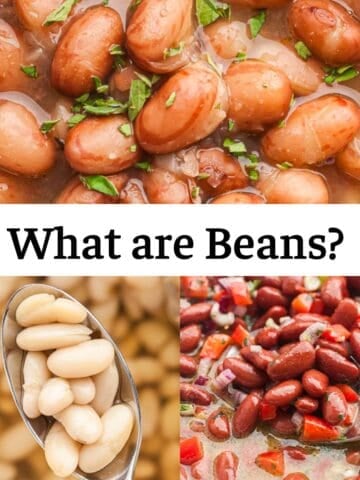
One reason beans can feel confusing is that they don't fit neatly into a single food category. Depending on how you look at them, beans can function as a vegetable, a protein, and a carbohydrate, which sounds contradictory until you understand how food groups are defined.
According to the USDA dietary guidelines, beans and other pulses are counted in more than one food group. They can be included in the vegetable group because they provide fiber and key micronutrients, and they can also count toward the protein foods group because they contribute meaningful amounts of plant-based protein.
When Beans Count as a Vegetable
Under the USDA MyPlate guidelines, beans, peas, and lentils are listed within the vegetable group because of their fiber content and their contribution of essential vitamins and minerals.
From a nutritional standpoint, beans provide dietary fiber, folate, potassium, iron, and magnesium, all nutrients identified by the Dietary Guidelines for Americans as important for overall health. Fiber intake in particular is consistently below recommended levels in the U.S., and beans are one of the most concentrated whole-food sources available.
The USDA FoodData Central database shows that one cup of cooked black beans provides approximately 15 grams of fiber along with meaningful amounts of folate, iron, magnesium, and potassium.
Large epidemiological studies have linked higher intake of legumes, including beans, with improved diet quality and markers of cardiometabolic health. In other words, the old adage "beans are good for your heart" turns out to be more than just kitchen wisdom. It is supported by a growing body of scientific research. Reviews published in journals such as Advances in Nutrition and Nutrients highlight that regular legume consumption is associated withimproved fiber intake, better glycemic control, and cardiovascular benefits.
So when beans are counted as a vegetable, it isn't just a technical classification. It reflects their meaningful contribution of fiber and micronutrients that many diets are otherwise lacking.
When Beans Count as a Protein
Beans are included in the USDA Protein Foods group because they contribute meaningful amounts of plant-based protein, but the story is a little more nuanced than just grams per serving.
Unlike many animal-based protein sources, beans are naturally low in total fat and contain virtually no saturated fat. For example, one cup of cooked black beans provides about 15 grams of protein with less than 1 gram of fat and essentially no saturated fat, according to USDA FoodData Central.
By comparison, many common animal protein sources contain significantly higher levels of saturated fat, which dietary guidelines recommend limiting for cardiovascular health. This lower saturated fat profile is one reason legumes are frequently highlighted in heart-healthy dietary patterns such as the Mediterranean diet and plant-forward dietary models.
Large-scale research helps explain why plant protein sources like beans are often emphasized in heart-supportive eating patterns. For example, Reynolds et al., 2019 in The Lancet conducted a meta-analysis showing that higher dietary fiber intake is associated with reduced risk of cardiovascular disease, type 2 diabetes, and all-cause mortality. Because beans provide both protein and substantial fiber, they contribute to this protective pattern.
Satija et al., 2016 in the Journal of the American College of Cardiology found that plant-based dietary patterns rich in whole plant foods were associated with lower risk of coronary heart disease, while less healthful plant-based patterns were not. This research supports the idea that choosing whole plant protein sources, including legumes like beans, can be part of a cardioprotective diet.
It is also worth noting that beans are not considered a complete protein on their own, meaning they do not contain all essential amino acids in optimal proportions. However, when paired with other plant foods such as whole grains, nuts, seeds, or dairy, they contribute to a complete amino acid profile across the meal. This is not about perfection at a single bite, but about dietary patterns over the course of the day.
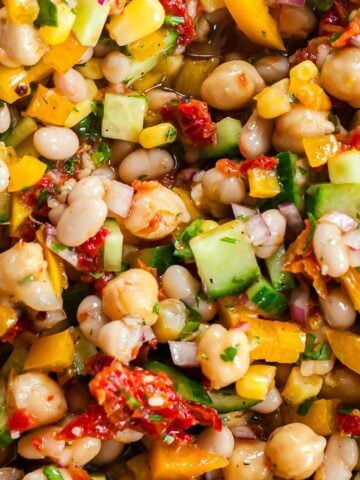
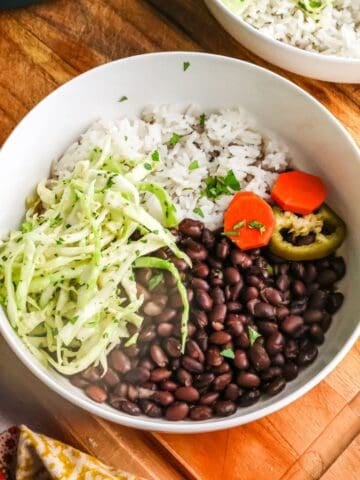
From a practical standpoint, this is part of why beans work so well in everyday meals. A bowl of beans and rice, lentils with whole grain bread, or chickpeas folded into a grain salad naturally creates complementary proteins without needing to micromanage amino acids. Beans may not be the most concentrated protein source available, but they are one of the most balanced.
When Beans Count as a Carbohydrate and High-Fiber Food
Beans are also a carbohydrate source, but they are very different from refined carbohydrates. The carbohydrates in beans are largely complex carbohydrates, meaning they digest more slowly and contribute to steadier blood glucose responses compared to highly processed grains or sugary foods.
According to USDA FoodData Central, one cup of cooked black beans provides approximately 40 grams of carbohydrate, the majority of which comes packaged with fiber.
USDA FoodData Central - Black Beans
This fiber content changes how those carbohydrates behave in the body. Dietary fiber slows digestion, supports satiety, and plays a role in cholesterol regulation and glycemic control. A large meta-analysis published in The Lancet in 2019 found that higher dietary fiber intake is associated with reduced risk of cardiovascular disease, type 2 diabetes, and all-cause mortality.
Beans also contain something called resistant starch. This is a type of carbohydrate that your body does not fully break down in the small intestine, so it acts a bit like fiber. Instead, it moves to the large intestine where it feeds beneficial gut bacteria. As those bacteria ferment it, they produce compounds that support gut health.
From a practical perspective, this means beans are not just "carbs" in the simplistic sense. They are carbohydrate-rich foods that bring fiber, resistant starch, and micronutrients along with them. That combination helps make meals more satisfying and metabolically steady, whether beans are served as the base of a dish or as part of a mixed meal.
Bringing It All Together
Dietary guidelines can be helpful frameworks, but they often sort foods into neat categories that do not always reflect how those foods behave in real meals. Beans resist simple labeling. They contribute fiber and micronutrients like a vegetable, protein like a plant-based protein food, and complex carbohydrates like a whole grain.
Because beans meaningfully contribute to multiple aspects of our nutritional needs, it can feel confusing to decide what they "are." In reality, they are all three. That flexibility is not a flaw in the system. It is a strength.
Practically speaking, this means beans can fit into almost any style of eating. They can anchor a plant-forward meal, stretch smaller portions of meat, support athletic recovery, increase fiber intake, or simply make a dinner more filling and balanced. Whether you think of them as a vegetable, a protein, or a carbohydrate, beans are a steady and versatile way to support overall health through everyday cooking.

Did you make this recipe? Let me know!