
This pea spread is bright, herby, and layered with flavor. Sweet peas get pulsed with garlic, shallot, fresh parsley, and preserved lemon into a chunky, vibrant spread that works beautifully piled onto toast, scooped with crackers, or spooned alongside roasted vegetables.
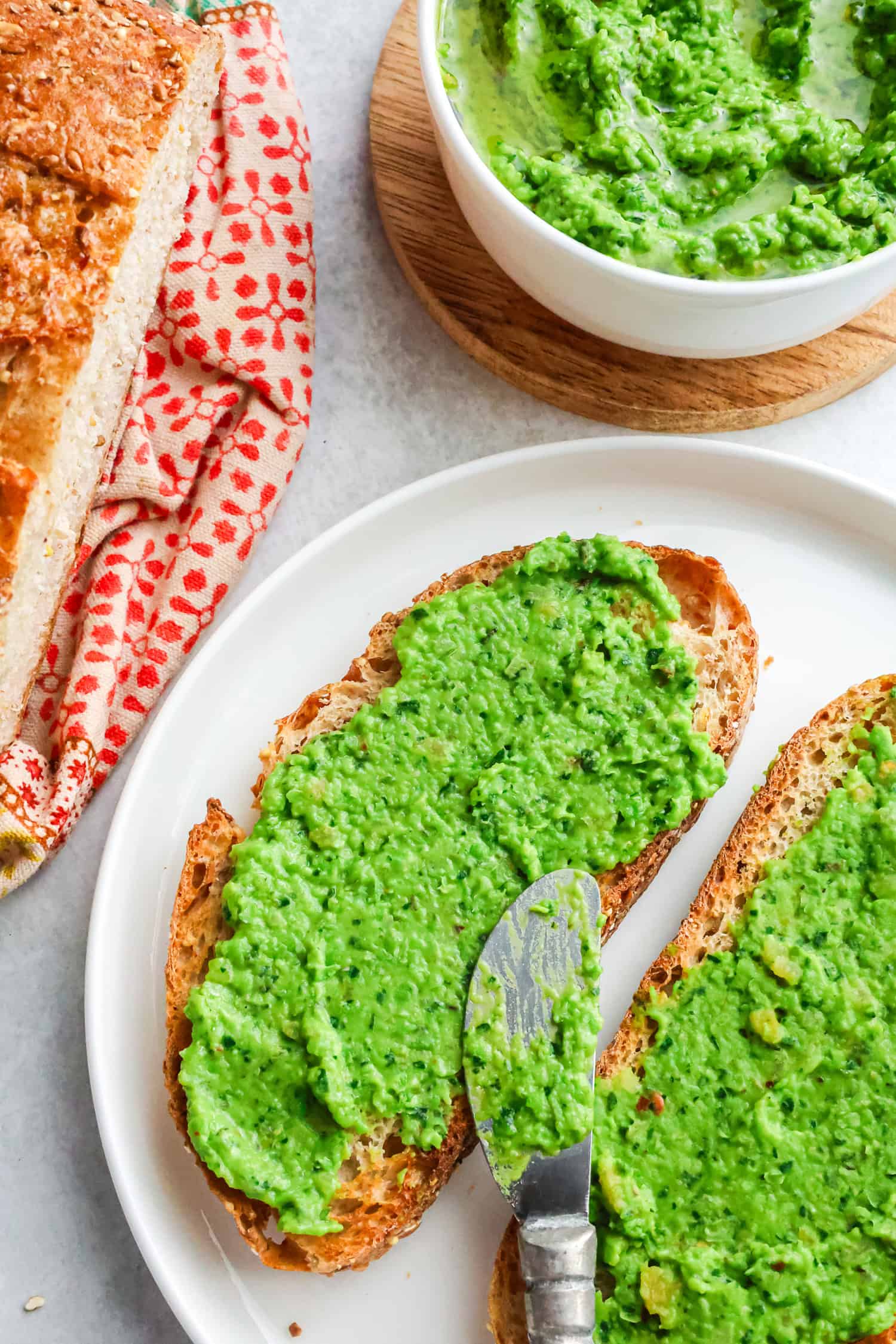
It comes together in about five minutes with no cooking required, which makes it one of those recipes I reach for when I want something that feels a little special but takes almost no effort. The preserved lemon adds a salty, citrusy depth that you really cannot get from fresh lemon alone, and the whole thing is naturally packed with fiber and plant protein.
The inspiration came from a sunny afternoon at Trillium Brewing, where I ordered a smashed pea toast topped with crunchy radishes. One bite and I was completely sold. I came home and started experimenting, and the version that stuck was this one, with preserved lemon stirred right into the spread. We grow peas in our backyard garden, and my daughter eats them right off the vine, so there are never enough left to actually cook with. That means I usually end up making this pea spread with frozen peas, which works beautifully. So while it hits all of those bright, springy recipe notes, it is easy to make year-round.
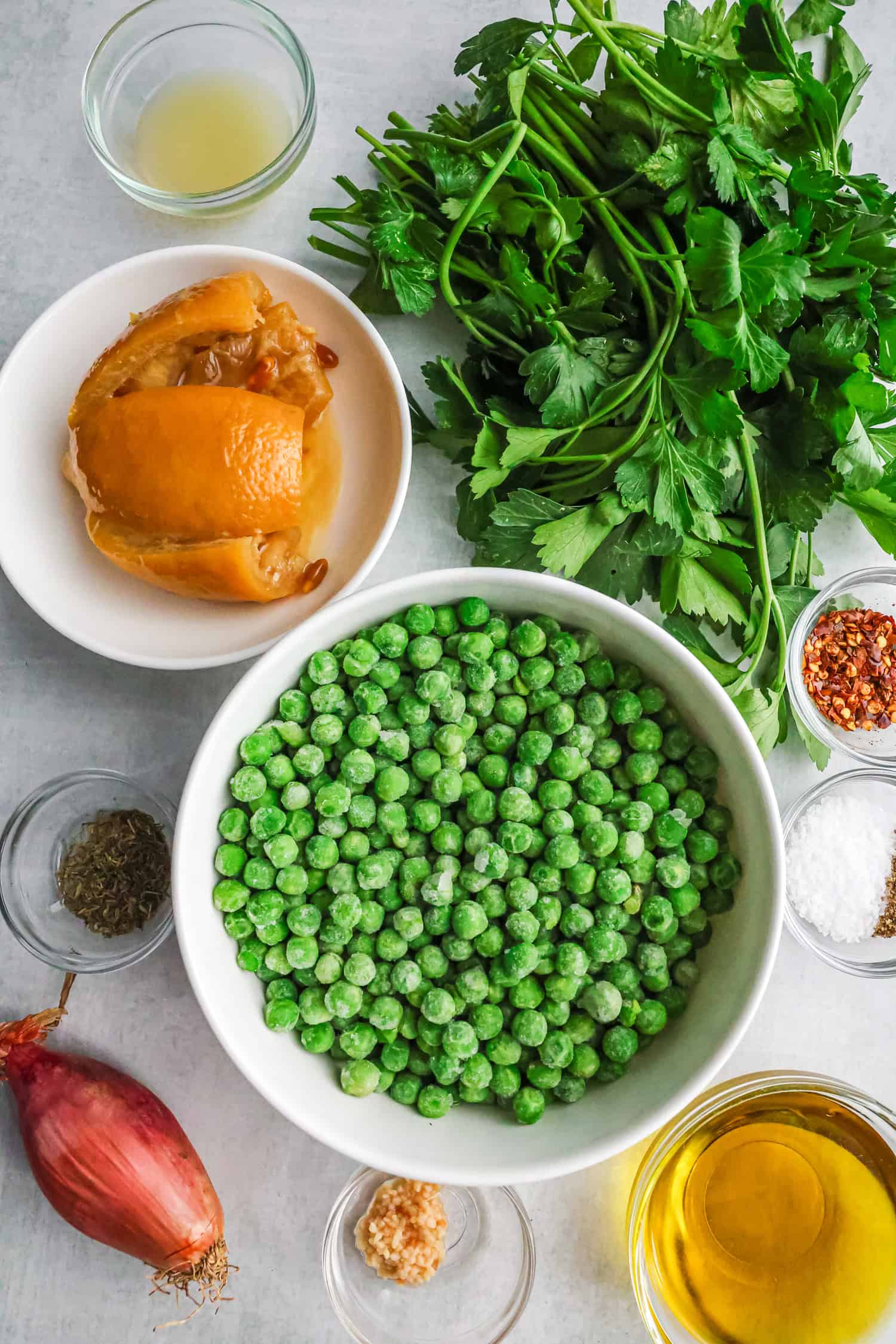
Ingredient Notes
Peas: Sweet English peas are the star here, bringing natural sweetness and that vibrant green color. Fresh peas from the garden or farmer's market are wonderful if you can get them, but frozen green peas (thawed) work just as well. The texture difference is minimal once everything is pulsed in the food processor. If you are using frozen, let them come to room temperature before blending. This keeps the spread from getting watery and helps it hold that bright green color.
Preserved Lemon: This is the ingredient that sets this pea spread apart. Preserved lemons are lemons packed and fermented in salt, and they deliver a deep, salty-citrusy punch that fresh lemon juice or zest alone cannot replicate. You only need the peel (scrape out and discard the flesh). Preserved lemons are one of those flavor booster ingredients that can do pretty amazing things in your kitchen, so I highly recommend picking some up next time you are at the grocery store. Look for them at international grocery stores, specialty markets, or online. You can also make them at home, and they are surprisingly easy. I prefer this spread with preserved lemon, but I have made it with fresh lemon and it is also really delicious. If you go that route, use the zest of one lemon, a tablespoon of lemon juice, and a generous pinch of extra salt.
Shallot: Adds a mild, sweet onion flavor that blends into the spread without overpowering the peas. A couple of tablespoons of finely chopped green onion (white and light green parts) can stand in if you do not have a shallot on hand.
Fresh Parsley: Flat-leaf parsley brings a fresh, herbal brightness that balances the richness of the olive oil and the saltiness of the preserved lemon. If you have fresh mint on hand, it makes a wonderful addition alongside the parsley.
Olive Oil: Use a good quality extra virgin olive oil here. Since the spread is not cooked, the flavor of the oil comes through clearly. Four tablespoons goes into the food processor, and a drizzle on top of the finished toast adds a nice richness.
How to Make This Pea Spread Recipe
Start by finely chopping 1 shallot and 1 garlic clove. Then prep the preserved lemon: scrape out and discard the soft inner flesh, and finely chop the peel. The peel is where all that concentrated salty-citrus flavor lives.
Add 2 cups of peas (thawed if frozen), ¼ cup fresh parsley, the chopped shallot and garlic, the chopped preserved lemon peel, 1 tablespoon lemon juice, 1 teaspoon fresh thyme, and 4 tablespoons olive oil to your food processor.
Pulse until a coarse paste forms, scraping down the sides as needed. You want some texture here, not a smooth puree. The chunky bits are part of what makes this spread satisfying to eat. A few pulses is usually enough.
Season with 1 teaspoon kosher salt and ½ teaspoon red pepper flakes, then give it one last quick pulse to combine. Taste and adjust the salt if needed. Transfer the spread to a bowl.
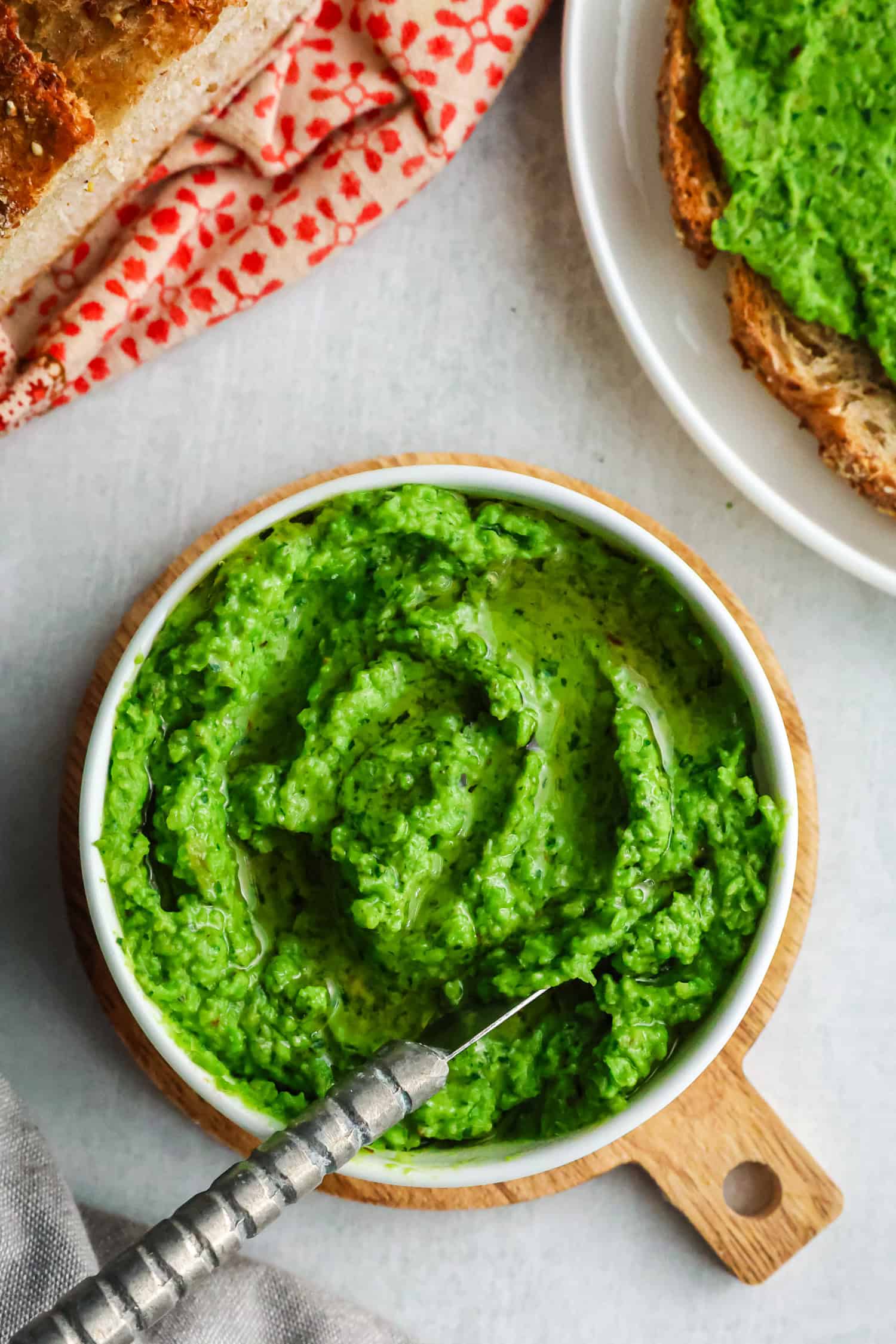
To serve as toast, spread it generously over thick slices of toasted sourdough and finish with a drizzle of olive oil and a sprinkle of lemon zest. It also works beautifully as a dip with crackers, pita, or raw vegetables.
How to Serve
- On toasted sourdough with marinated feta and a handful of fresh sprouts or microgreens
- Topped with quick-pickled onions and a sprinkle of Aleppo pepper for color and gentle heat
- With a fried or soft-boiled egg on top for a hearty brunch
- As a dip alongside crackers, pita wedges, or sliced vegetables
- Spread into a sandwich with roasted vegetables and a smear of goat cheese
My favorite way to eat this is the simplest: thick slices of sourdough, toasted golden brown, with a heavy smear of the pea spread and a soft-boiled egg on top. If you want to dress it up for company, the Marinated Feta with Lemon and Rosemary is a perfect pairing.

Tips, Tricks, and Alterations
Texture control: Pulse the food processor in short bursts rather than running it continuously. You want a coarse, chunky spread, not a smooth puree. If you do not have a food processor, a potato masher and a medium bowl work well. The texture will be a little more rustic, which is perfectly fine.
Flavor variations: Stir in 2 tablespoons of crumbled goat cheese for extra creaminess. A pinch of Aleppo pepper instead of (or alongside) the red pepper flakes adds a milder, slightly smoky heat. A handful of fresh mint added alongside the parsley gives it a brighter, more summery flavor.
Make it a dip: If you want a scoopable consistency for dipping, thin the spread with a tablespoon or two of olive oil or a splash of water until it reaches the texture you want.
Storage: Store the pea spread in an airtight container in the refrigerator for up to 3 days. It also freezes well for longer storage. Defrost overnight in the refrigerator and give it a quick stir before serving. The color may darken slightly over time, but the flavor stays good.
Make it ahead: The spread is actually better after it sits in the fridge for an hour or so, giving the flavors time to come together. It is a great option for meal prep or for making ahead when you are having people over. If you love bean-based spreads, the Warm White Bean and Garlic Spread is another favorite that comes together quickly.

A Note from a Passionate Pulse Person
If you have been around here for any amount of time, you know I talk about beans and lentils constantly. But peas belong in that conversation too. Green peas are technically a pulse, which means they are part of the same family as beans, lentils, and chickpeas. They are packed with fiber and plant protein, and they bring a lot of the same nutritional benefits you get from a bowl of lentil soup or a scoop of hummus.
That is part of why I love this recipe. It is a pulse-based spread that does not taste like "health food." It tastes bright and fresh and like something you would order at a restaurant. So if you are trying to eat more beans and lentils (or just more plants in general), this is a really easy, delicious way to do it.
This pea spread recipe is one of those recipes I come back to every spring, and well into summer too. It is fast, flexible, and the kind of thing that makes a simple piece of toast feel like a real meal. If you try it, I would love to hear how you serve it. Leave a comment and let me know, and if you enjoyed this recipe, a 5-star rating really helps other busy cooks find it.
If you are looking for more spreads and dips built around beans and lentils, check out the Roasted Carrot Dip or the Mediterranean Layer Dip. Both are crowd favorites.
Recipe

Pea Spread with Preserved Lemon (Smashed Pea Toast)
Equipment
- Food processor (or potato masher and bowl)
Ingredients
- 2 cups fresh or frozen peas thawed if frozen
- 1 shallot finely chopped
- 1 garlic clove chopped
- ¼ cup fresh flat-leaf parsley
- ½ preserved lemon peel only, finely chopped
- 4 tablespoons extra virgin olive oil
- 1 tablespoon lemon juice
- 1 teaspoon fresh thyme
- 1 teaspoon kosher salt
- ½ teaspoon red pepper flakes
Instructions
- Finely chop 1 shallot and 1 garlic clove. Scrape the flesh from the preserved lemon half and discard it, then finely chop the peel.1 shallot, 1 garlic clove, ½ preserved lemon
- Add 2 cups peas, ¼ cup fresh parsley, the chopped shallot, garlic, and preserved lemon peel, 1 tablespoon lemon juice, 1 teaspoon fresh thyme, and 4 tablespoons olive oil to a food processor.2 cups fresh or frozen peas, ¼ cup fresh flat-leaf parsley, 1 tablespoon lemon juice, 1 teaspoon fresh thyme, 4 tablespoons extra virgin olive oil
- Pulse in short bursts until a coarse, chunky paste forms, scraping down the sides as needed. You want visible texture, not a smooth puree.
- Season with 1 teaspoon kosher salt and ½ teaspoon red pepper flakes. Give it one final quick pulse to combine. Taste and adjust salt if needed.1 teaspoon kosher salt, ½ teaspoon red pepper flakes
- Transfer to a bowl. Spread generously over toasted sourdough or serve as a dip. Finish with a drizzle of olive oil and a sprinkle of lemon zest.
Notes
Nutrition


[…] Pea and Preserved Lemon Spread on Toast […]